

Click here to view the published article on Hortidaily.com
Publication date:
© HortiDaily.com / Thijmen Tiersma
To optimise cucumber cultivation, HortiTech is conducting research focused on irrigation at its greenhouse facility in Honselersdijk, in the Dutch province of South Holland. The study combines multiple water treatment technologies simultaneously.
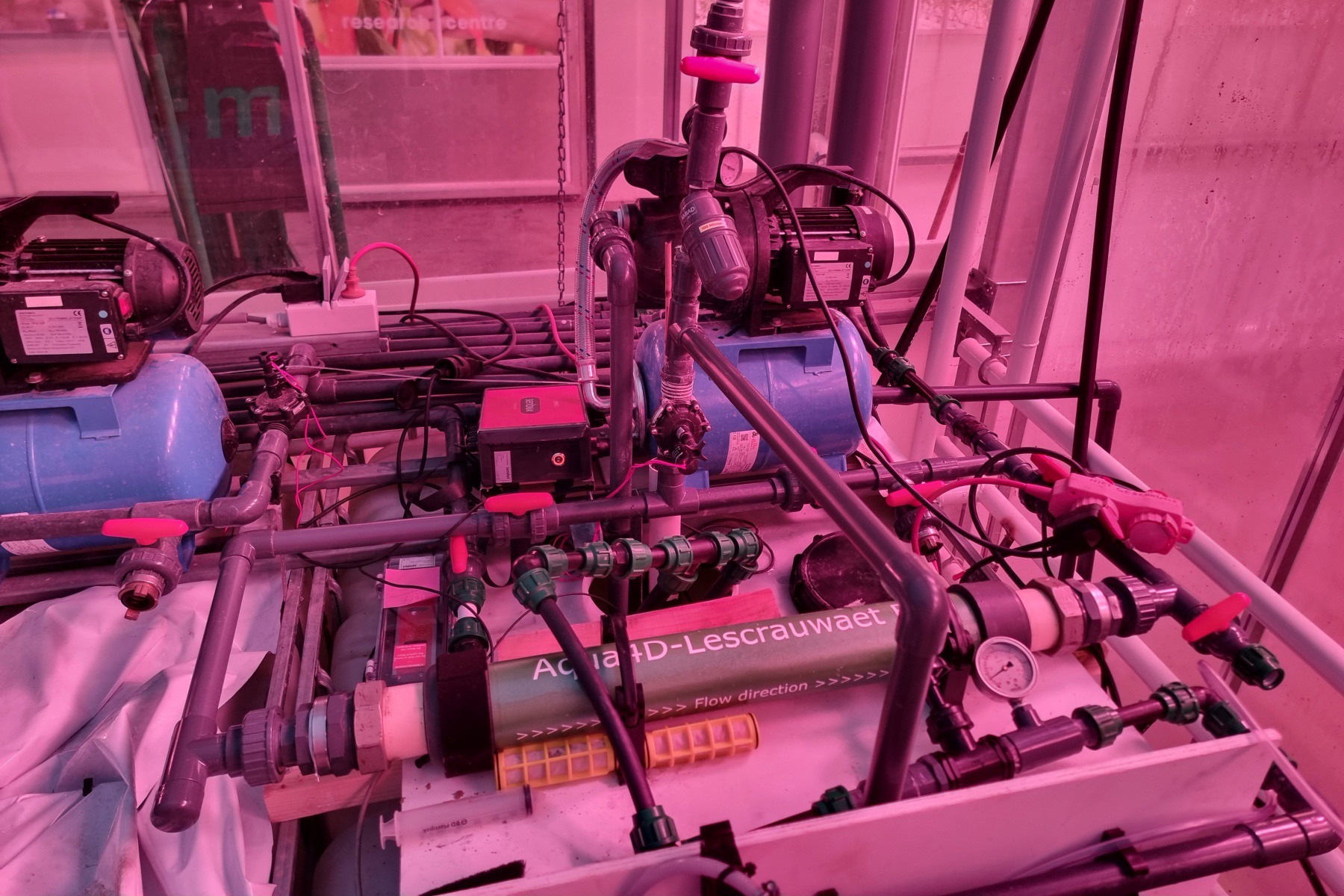
The research department in the Honselersdijk greenhouse is combining electromagnetic resonance (EMR), nano-oxygen injection, and UV-C water disinfection. According to Raymond Lescrauwaet of Lescrauwaet, based in Nederhorst den Berg, this combination has not previously been applied anywhere else in the world. His company introduced water systems from Aqua4D, UltraO2, and PathoLed into Dutch horticulture, designed the trial setup, and built low-budget prototypes.
More with less
The installation was subsequently built and commissioned in January 2026, at which point the crop was already underway. The system is being tested in a high-wire cucumber crop that started in mid-November. Multiple growing cycles are planned. The first cycle was concluded after 25 weeks of cultivation, in week 19.
The objective of the research is to do more with less, improving quality and quantity while reducing inputs. “We do this by applying biostimulants, beneficial bacteria and fungi, technical installations, and cultivation methods,” says Perry van Adrichem on behalf of HortiTech. The greenhouse section in Honselersdijk covers 432 m² and contains 12 growing gutters, of which 6 are reference gutters and 6 are research gutters. All gutters are 20 metres long.
Less biofilm
Shortly after the combined water treatment technologies were commissioned, the dissolved oxygen level in the IBC tank rose from approximately 6 ppm to 30 ppm, Lescrauwaet reports. “This level then remained fairly stable around that value.”
After several months, sections of irrigation tubing were removed from one treated gutter and two reference gutters. Visual inspection showed that less biofilm was present in the treated situation. Samples are currently being analysed by Normec Groen Agro Control, including for colony-forming units (CFUs). In the coming period, the effects on production, both in terms of quality and quantity, will also be assessed.
Combination of techniques
As noted, three technologies are being combined in the trial. These are the Aqua4D electromagnetic resonance technology, UltraO2 oxygen enrichment using a venturi system, and UV-C treatment of circulating drain water using a system from PathoLED.
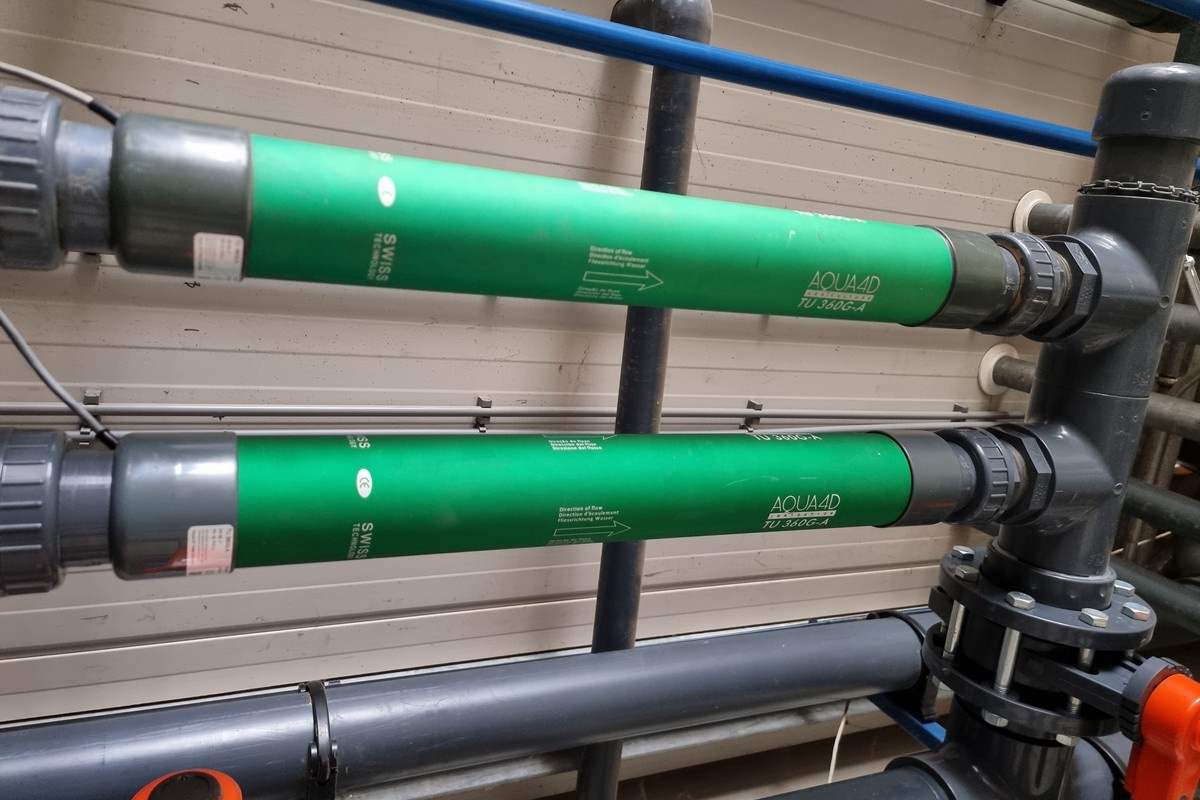
“With Aqua4D, you are treating the water itself. the water molecules,” Lescrauwaet explains. “These are restructured by breaking hydrogen bonds. As a result, particularly in soil-based cultivation, nutrients are taken up more effectively, leaching improves, and soil life increases.” This has positive effects on plant resilience, according to Lescrauwaet. “Because this technology refines the molecular water structure, it can also enhance the effectiveness of complementary technologies. It makes the water more fluid without any additives or unwanted side effects.”
Dissolving more oxygen in water
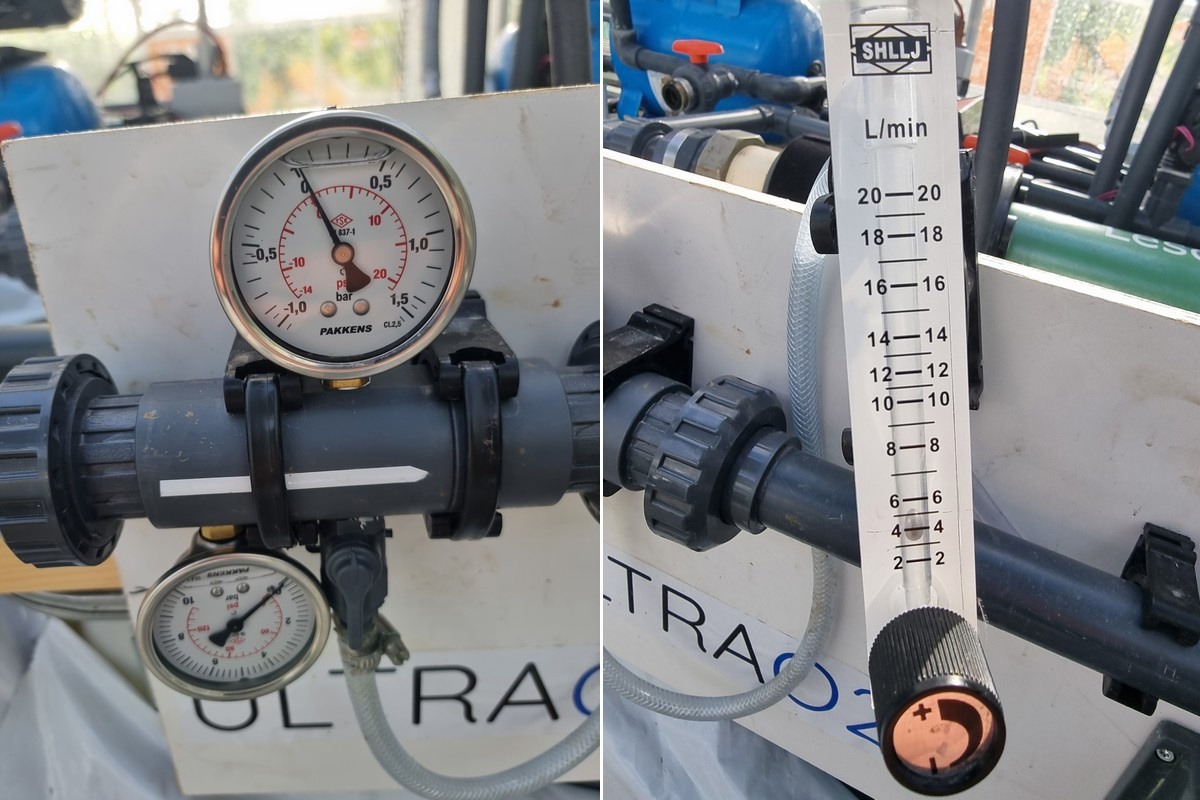
The industry is constantly looking for ways to dissolve even more oxygen in water than is possible with existing technologies, preferably at the lowest possible purchase and maintenance cost, Lescrauwaet notes. The Aqua4D technology supports, among other things, the performance of oxygen enrichment, in this case via the UltraO2 venturi system. “Here, water is forced under pressure through a constriction, causing suction and cavitation, which allows more oxygen to dissolve. Oxygen in the water is critical for water quality.
Lower oxygen levels mean, among other things, fewer beneficial bacteria and more pathogens, which thrive in low-oxygen environments. Oxygen also plays a role in the breakdown of organic material in water systems.”
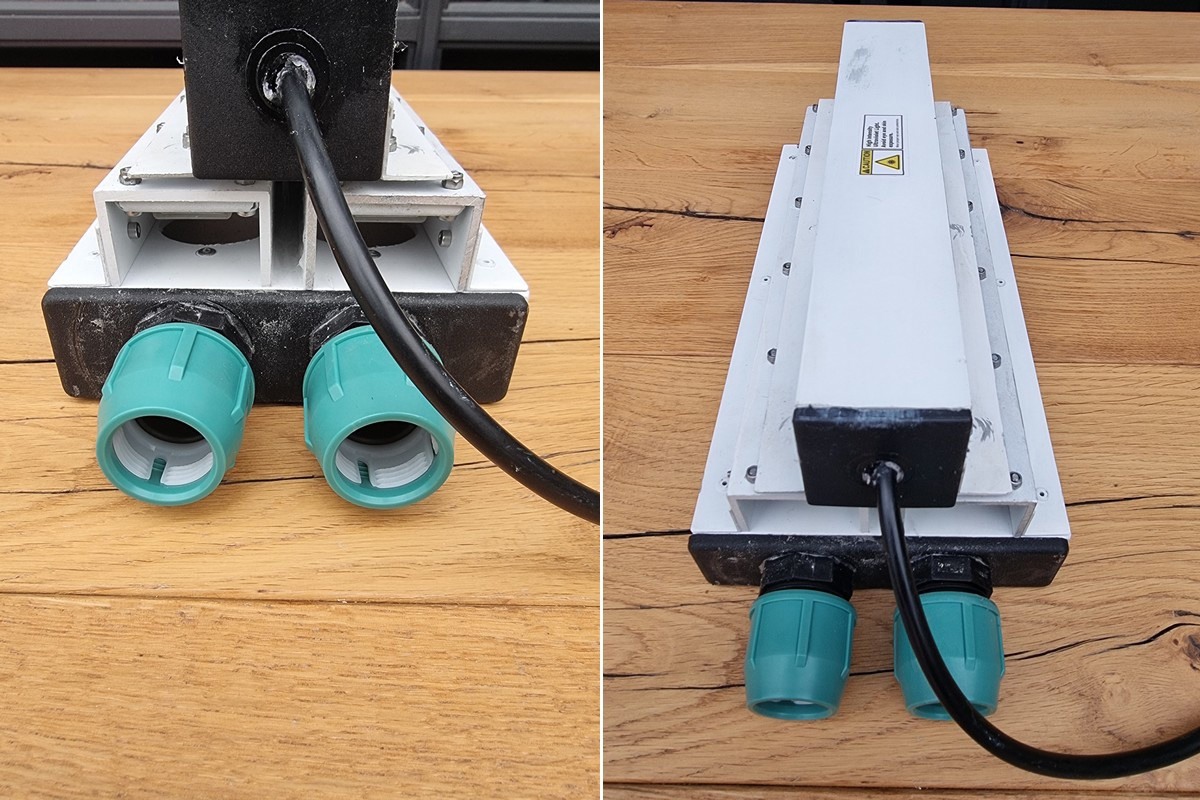
The third component is UV-C treatment of circulating drain water using systems from PathoLED. This makes use of lens enhancement, effectively a magnification mechanism. to intensify the UV-C effect. The technology is applied to reduce micro-organisms and control pathogens in the water.
Strength in combination
According to Lescrauwaet, combining these technologies can create a mutually reinforcing effect. “Because more oxygen and micro-ultrafine particles can likely be absorbed and remain available for longer, the two technologies essentially call out to be used together.”
The Aqua4D water treatment technology has been widely applied around the world. In practical applications, an average water saving of approximately 10% has been recorded, depending on local conditions, alongside a comparable reduction in fertiliser use. Changes have also been observed in water distribution in the growing medium and in root development.
In addition, effects on the physical properties of water have been reported, such as surface tension, which can influence distribution and uptake. In other applications, differences have been observed in the stability of propagation plugs and moisture distribution. In logistics processes, lower moisture content can lead to reduced transport weight.
Within the current trial, the focus is on water quality, biofilm formation, and crop performance. Results from laboratory analyses and yield measurements are expected to be shared at a later stage.
For more information:
Lescrauwaet B.V.
+31 (0)35 8872683
info@lescrauwaet.com
www.lescrauwaet.com
HortiTech
www.horti-tech.com